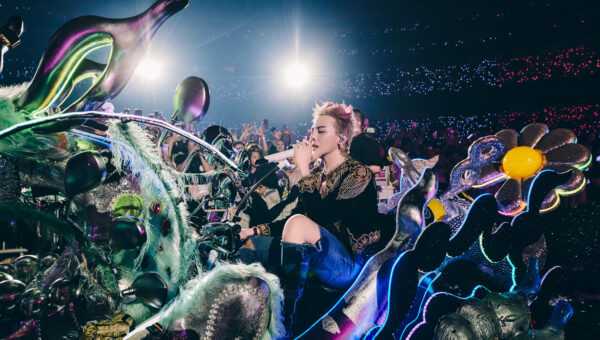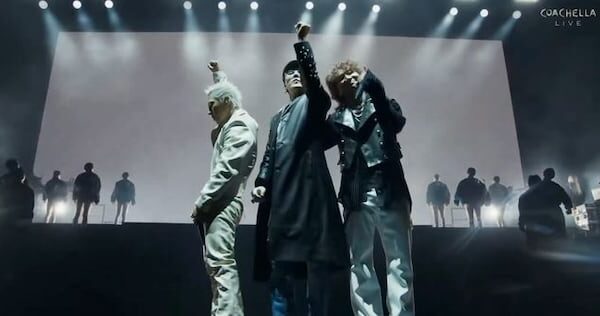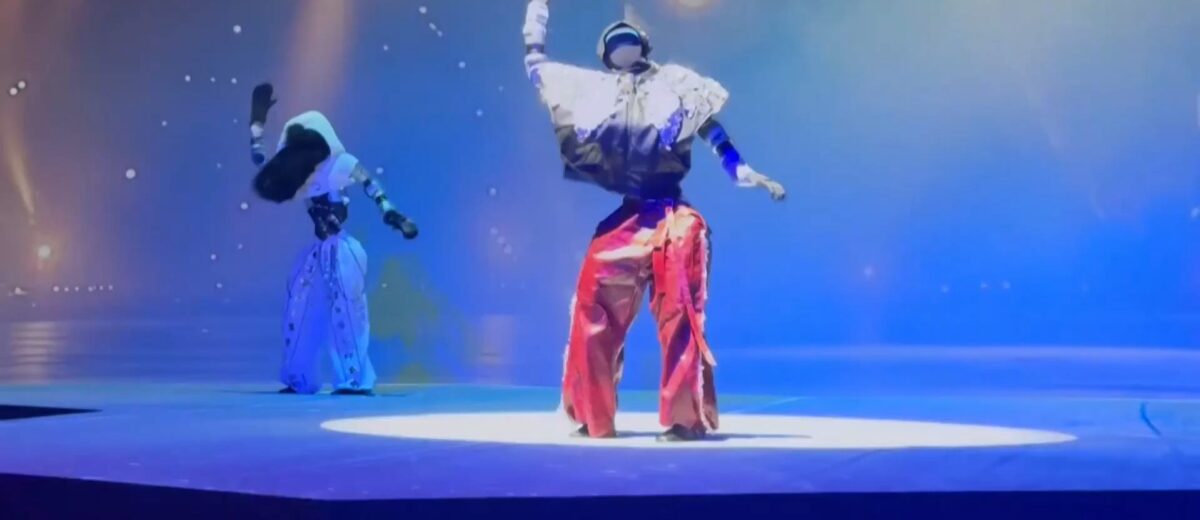
A robot K-pop stage is no longer a concept video or a concert intro. Galaxy Corporation, the company best known globally as G-Dragon’s agency, has opened the doors to Galaxy Robot Park in Seoul and is preparing to turn robot-led K-pop performances into a year-round attraction. The project puts one of the most famous names in Korean pop culture next to motion-capture robotics, family entertainment, fan culture, and a possible world tour before the end of 2026.
The news arrived on May 15 through multiple Korean and international reports, with Galaxy Corporation presenting the park as a dedicated venue where robots perform choreographed stages to K-pop songs. The venue is located in Gangdong District in eastern Seoul, spans about 16,500 square meters, and is scheduled for an official grand opening in August 2026 after a limited opening earlier this month. For K-pop fans, the biggest headline is clear: the next major performance format from Seoul may not be another hologram, virtual avatar, or AI vocalist. It may be a physical robot dancing to G-Dragon.
Galaxy Robot Park Brings Robot K-Pop Performances To Seoul
According to Yonhap News Agency, Galaxy Corporation said the new robot-themed entertainment park will combine K-pop with robotics technology. The site includes interactive programs for children and a concert hall built for robot performances. The company also said the robots use motion-capture technology to learn dance moves from K-pop artists, turning idol choreography into repeatable mechanical performance rather than screen-based animation.
That detail matters because K-pop is a performance-first industry. A comeback is judged not only by the song but also by stage presence, choreography, camera movement, styling, and replay value. Galaxy Robot Park is trying to move that full performance grammar into a new format. It is not simply putting a robot onstage as a novelty act. The park is positioning robot choreography as a ticketed cultural product that fans can watch in person.
Korea JoongAng Daily reported that three robots have already taken the main arena stage to perform to G-Dragon’s “POWER” and “HOME SWEET HOME,” as well as Taemin’s “Advice” and “IDEA.” Those song choices give the project a strong K-pop identity from the start. G-Dragon brings global star power, while Taemin’s catalog is closely linked to precise dance performance and solo-stage intensity. In other words, Galaxy Corporation chose material that makes the robot concept easy to understand for fans who already pay attention to choreography.
What Galaxy Corporation Confirmed About The Opening Timeline
The park partially opened to a limited group of visitors earlier in May, and the full opening is planned for August. Euronews, through AOL, reported that the venue launched on May 5 and hosted about 100 children at a soft launch event, including several with learning difficulties. The same report described the park as a cultural space where humans and robots interact through music, games, and live experiences rather than a simple technology exhibition.
The operating plan is ambitious. Korea JoongAng Daily reported that the world’s first robot K-pop park plans to hold three shows every weekend starting in June. From September, the company plans to expand that schedule to more than six performances a day. Galaxy Corporation CEO Choi Yong-ho framed the venue as a place where visitors stay for several hours, not a short photo stop.
“We aim to create a robot-themed park where people can stay for about three to four hours,” Choi Yong-ho said at a media event, according to Yonhap News Agency.
Choi also said Galaxy Corporation plans to stage more than 1,000 K-pop robot shows each year. That number turns the project from a tech showcase into a business model. A thousand annual performances would place the venue closer to an always-on attraction than a one-time promotional pop-up. It also gives the company enough performance volume to test ticket pricing, fan demand, international tourism, school visits, and family entertainment packages.
G-Dragon’s Agency Is Building A New Kind Of K-Pop IP Business
Galaxy Corporation has moved quickly since taking on G-Dragon, and Galaxy Robot Park shows how the company wants to expand beyond artist management. Bernama, citing Yonhap, noted that the company manages G-Dragon and Taemin of SHINee and also produced the hit Netflix competition series “Physical: 100.” That mix of idol management, television production, and technology branding gives the company a broader entertainment profile than a traditional K-pop agency.
The robot project fits that strategy because it can reuse and extend music intellectual property. Korea JoongAng Daily reported that early performances will focus on artists under Galaxy Corporation, while Choi is also preparing shows built around legacy artists and retro hit songs whose copyrights have already been acquired. If the plan works, a song becomes more than a streaming track, a concert stage, or a music video. It becomes material for robot shows, tourism products, education programs, and international touring packages.
That is why the phrase “robot K-pop idol” has caught attention. The immediate product is not a new idol group with robot personalities. It is a venue where robots perform K-pop choreography. Yet the long-term implication is bigger. If fans accept robot stages as a legitimate K-pop-adjacent experience, agencies and rights holders may gain another way to monetize older catalogs, choreography, and artist brands without requiring the artist to appear physically at every event.
The hardware partner also adds weight to the story. Korea JoongAng Daily reported that the robots were built by Unitree Robotics, a Hangzhou-based company known for boxing robots. That connection helps explain why the park’s offering is not limited to dance. Reports mention robot-painted portraits, hands-on robot control experiences, and staged robot fights inside a central Robot Arena. The venue is selling a full robotics entertainment package with K-pop as the strongest cultural hook.
A Robot K-Pop World Tour Could Follow Before The End Of 2026
The most striking part of Galaxy Corporation’s announcement is not the Seoul venue alone. It is the global plan. Korea JoongAng Daily quoted Choi as saying the company is preparing to take the robot performances on a world tour before the end of this year, including distant markets such as Africa, South America, and the Middle East.
“By the end of this year, we’re planning to take them on a world tour, which will also include far destinations like Africa, South America, and the Middle East,” Choi said, according to Korea JoongAng Daily.
That claim should be read carefully. A robot world tour faces practical questions about shipping, venue safety, local permits, staging, music rights, and whether fans will pay concert-level prices for non-human performers. But if Galaxy Corporation can package the show for malls, expos, family venues, festivals, or brand activations, the model may travel faster than a conventional idol tour. Robots do not need rest days in the same way artists do, and a show built around existing songs can be repeated across markets with a consistent performance structure.
There is also a tourism angle. Seoul already attracts K-pop fans through concerts, pop-up stores, agency buildings, dance studios, birthday cafes, and filming locations. Galaxy Robot Park gives the city another destination that links Korean pop culture with technology. For international visitors, the attraction offers something easy to understand even without deep knowledge of the Korean entertainment industry: robots dancing to famous K-pop tracks in the city where those tracks became global culture.
Why This Matters For K-Pop Fans And The Industry
K-pop has always adapted quickly to new media formats. Music shows turned choreography into weekly competition. Fancams changed how individual members build popularity. TikTok made dance challenges part of comeback strategy. Virtual idols and AI-assisted production pushed companies to rethink what counts as performance. Galaxy Robot Park enters that same conversation, but with a physical presence that audiences can watch in a venue.
For fans, the appeal depends on execution. A robot performance needs precision, scale, lighting, stage design, and a clear reason to exist beyond technical novelty. If the robots only imitate familiar choreography, the excitement may fade quickly. If the park creates stages that human dancers cannot safely or consistently perform, the format gains its own identity. The strongest version of Galaxy Robot Park would not replace idols. It would create a separate performance layer built around speed, repetition, mechanics, and theatrical staging.
For agencies and rights holders, the business case is clearer. Robot shows can extend the shelf life of songs, generate licensing revenue, and offer controlled experiences around artists who may be unavailable, inactive, or focused on other projects. That does not mean fans will automatically embrace every robot performance. K-pop fandom is deeply attached to personality, live vocals, member chemistry, and the emotional bond between artists and audiences. A robot stage cannot replace that. It can, however, add a new product category around the music.
The Bottom Line
Galaxy Robot Park is one of the clearest signs yet that K-pop companies are looking beyond albums, tours, and pop-up stores. Galaxy Corporation is building a venue where robotics, choreography, artist IP, children’s programming, and global fan tourism meet in one branded space. The project starts with G-Dragon and Taemin songs, but its real test will come after the August grand opening, when the park expands performances and begins proving whether robot K-pop can draw repeat visitors.
If the planned 1,000 annual shows and world tour become reality, Galaxy Robot Park may become more than a strange headline about robots dancing to K-pop. It may mark the start of a new entertainment format where the music industry treats choreography as programmable, exportable, and endlessly repeatable live content. For now, Seoul has the first stage.
Sources
Reporting referenced in this article includes Yonhap News Agency, Korea JoongAng Daily, Euronews via AOL, and Bernama-Yonhap.