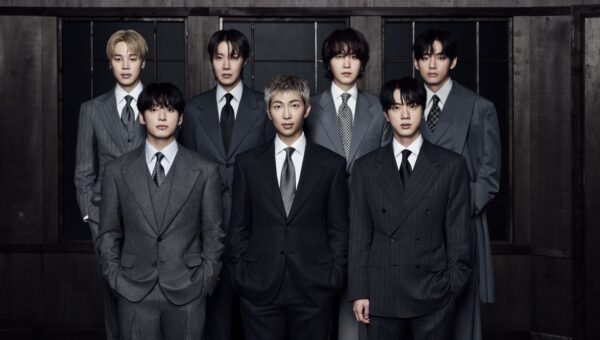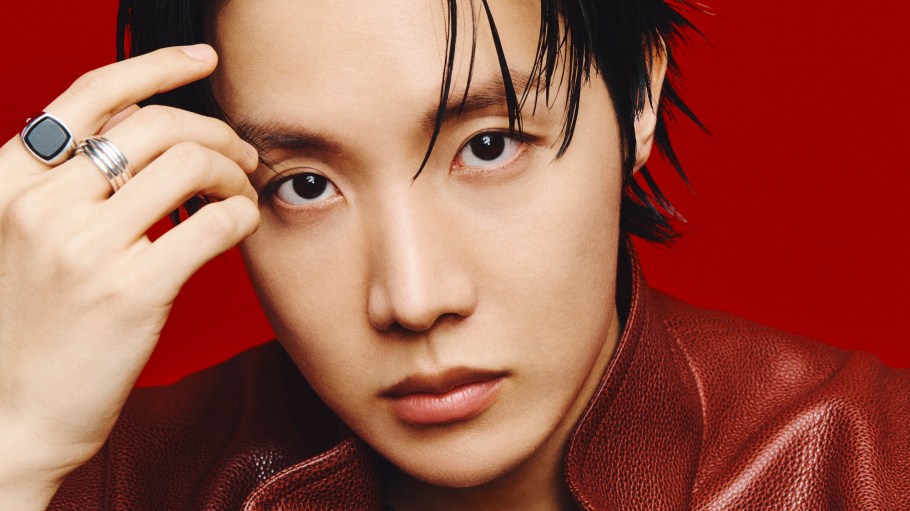
Grief entered BTS’s Tokyo Dome stop before the lights fully came up, and that single detail changed the emotional temperature of the night. During the first Tokyo concert on April 17, j-hope told ARMY that his maternal grandmother, the family member who raised him from childhood, had passed away shortly after BTS arrived in Japan. In a touring season already filled with major headlines around ARIRANG, chart wins, stadium demand, and the group’s full-team momentum, this was a different kind of news. It was quiet, deeply personal, and impossible to separate from the performance that followed. The story quickly became one of the most talked-about K-pop moments of the day because it revealed something fans often understand about BTS at once: even on the biggest stages, the group’s emotional life still shapes the room.
That is also why this moment matters beyond a single speech. The BTS Tokyo concert was already under a global spotlight as part of the group’s high-profile ARIRANG world tour. But j-hope’s words gave the show a second narrative, one centered not on scale, but on loss, resilience, and the support system that allows BTS to keep moving. For readers tracking BTS news, j-hope news, or the latest BTS Tokyo concert developments, this became the defining emotional headline of the night.
What j-hope said at the BTS Tokyo concert
According to multiple reports published within hours of the concert, j-hope addressed the audience directly during the Tokyo Dome show and explained why he seemed emotionally heavy. He began with unusual candor, telling fans that what he wanted to say might feel serious, but that he needed to share it honestly. The key revelation was devastating. He said that right after arriving in Japan, he learned that his maternal grandmother had died. He identified her not simply as a relative, but as the grandmother who raised him when he was little. That phrasing landed with force because it framed the loss not as distant family news, but as the loss of one of the people most responsible for who he became.
“Right after we arrived in Japan, I got the news that my maternal grandmother — the one who raised me from when I was little — had passed away.”
He did not stop at the announcement itself. In coverage cited by Billboard, j-hope said, “I was in complete shock and honestly didn’t know what to feel.” That line explains why the moment spread so quickly across fan communities and music news feeds. It was not polished for effect. It sounded like what it was: a person trying to describe the strange numbness that arrives before grief becomes fully real. In the context of a stadium show, the honesty felt even sharper. K-pop concerts are built on precision, spectacle, and control. j-hope’s words cut through all of that and made the night feel immediate.
He also shared the next part of the story, which turned the speech from a statement of loss into a statement of gratitude. He explained that being with the members, eating with them, and throwing himself into rehearsals helped lessen the bewilderment he felt. That detail matters because it shifted the Tokyo Dome moment away from simple sadness and toward the kind of collective support that fans have long associated with BTS. The concert did not erase the loss. It gave him a place to stand inside it.
Why fans responded so strongly to the speech
The reaction was immediate because j-hope’s relationship to family has always been part of how fans understand his public warmth. Reports following the concert noted that many ARMYs remembered earlier stories from j-hope and his family about being raised by their grandmother. That memory gave the speech a painful clarity. Fans were not responding to a vague mention of bereavement. They were responding to the loss of a figure who had already existed in the background of his personal story.
There was also the emotional contrast of the setting itself. Tokyo Dome is a symbol of achievement. Performing there on a major BTS world tour stop is the kind of career milestone usually described in terms of scale, production, and prestige. Yet the night’s most memorable detail was intimate and human. In fan reactions shared across social platforms and in entertainment coverage, the strongest theme was not surprise at the performance quality, but admiration for j-hope’s composure and openness. Many fans framed the moment as proof of his professionalism, but that word alone does not capture why it resonated. What people were really responding to was his decision to speak plainly instead of pretending that nothing had happened.
That honesty also created a different relationship between stage and audience. Rather than asking for sympathy directly, j-hope thanked ARMY for helping make the concert meaningful. He spoke about his grandmother being proud not only of him, but of all the members, and said he hoped she would have loved what she saw from above. In that sense, the audience was not positioned as spectators watching a difficult confession. They were folded into a tribute.
“My grandmother was always so proud — not just of me, but of all the members. She thought what we did was truly incredible.”
How the moment fits j-hope’s role inside BTS
The timing of the Tokyo speech matters even more because it arrived on the same day that fresh long-form coverage around j-hope’s place in BTS was circulating. In a Rolling Stone interview published April 17, he reflected on his position inside the group with striking simplicity. “I do what I can for the other members,” he said, adding that what people call his role in the team “just comes naturally.” Those comments were not about grief, but they now read as an important frame for understanding the Tokyo moment. When he explained that the members helped him through the immediate shock of the news, it echoed exactly how he had described BTS itself: a unit where care is active, habitual, and mutual.
For years, fans and interviewers have treated j-hope as one of the group’s emotional stabilizers. He brings energy into public moments, keeps momentum alive in interviews, and often acts as a bridge between intensity and ease. The Tokyo speech inverted that familiar dynamic for a moment. Instead of being the person who lifts the room, he described being held up by the people around him. That reversal is one reason the story traveled so far. It showed the internal structure of BTS in action. Support was not branding. It was something he could point to while grieving.
That same Rolling Stone interview also helps explain why fans saw the moment as more than celebrity news. j-hope said he wants BTS 2.0 to focus on continuing to make music together and sustaining the bond between the members and their fans over many years. The Tokyo Dome speech brought that idea out of the level of mission statement and into lived reality. When artists talk about trust, fans listen. When that trust becomes visible in a hard moment, people remember it.
Why this became one of the day’s biggest BTS headlines
From a pure news perspective, the story had unusual force because it sat at the intersection of several active BTS narratives. The group is in the middle of one of the year’s most closely watched K-pop tours. ARIRANG has also been performing strongly commercially, with Billboard reporting that the album recently secured a third week at No. 1 on the Billboard 200. That means every stop on the tour is already being watched for set list changes, fan turnout, performance clips, and new signs of the group’s post-reunion era. When j-hope made such a vulnerable statement in that environment, the clip and the quotes were bound to travel quickly.
It also became a major headline because it was not promotional in nature. Many fast-moving K-pop stories are built around scheduled drops: a teaser, a chart milestone, a ticketing record, a brand announcement, a comeback schedule. This story broke through because it was unscripted and emotionally consequential. Fans were not being invited to decode a campaign. They were being asked to witness a real moment inside a world tour stop that had suddenly taken on another meaning.
That difference matters for search interest as well. Readers looking up terms like ‘j-hope grandmother,’ ‘BTS Tokyo concert April 17,’ or ‘BTS ARIRANG Tokyo news’ are not only chasing updates. They are trying to understand what happened, why fans reacted so strongly, and how this moment fits into the larger BTS comeback cycle. That is exactly why the story holds staying power beyond the first viral clip.
What the Tokyo Dome speech says about BTS and ARMY right now
At its core, the Tokyo Dome moment was not about turning grief into content. It was about the kind of relationship BTS has built with its audience over time. j-hope did not speak in the language of spectacle. He spoke in the language of trust. He shared the news because he wanted fans to understand what he was carrying that day. In return, the reaction was not defined by curiosity alone, but by condolence, concern, and respect. That exchange helps explain why BTS remains culturally powerful even after years at the top. The group’s scale is enormous, but the emotional contract with fans still depends on directness.
There is also something revealing in the way the moment connected the personal and the collective. j-hope’s tribute to his grandmother widened into a tribute to the members and to ARMY. The speech suggested that his grief did not sit outside the concert. It moved through the concert and changed what the concert meant. Tokyo Dome became more than a stop on the schedule. It became the place where a private loss met public love.
For BTS, that may be the deeper lesson of the night. Stadium tours are often remembered for scale, records, and production highlights. This show will also be remembered for a few sentences spoken with visible effort. In a year full of massive K-pop headlines, j-hope’s Tokyo speech stands out because it reminded people that even the biggest global acts are still made up of individuals carrying real lives behind the choreography and the cameras. That truth is sad, but it is also why the moment felt meaningful. Fans did not leave with less admiration. They left with more.
As the ARIRANG world tour moves on from Tokyo to its next destinations, this speech will remain part of the story surrounding BTS in 2026. Not because it disrupted the group’s momentum, but because it revealed the emotional foundation underneath it. For anyone following BTS news, K-pop concert news, or j-hope updates this week, that is the headline that mattered most.