BTS has not merely resumed touring. In Goyang, the group used the opening stretch of its Arirang world tour to show how its next era will work onstage. The first South Korean dates, held at Goyang Stadium just outside Seoul, launched what Yonhap described as an 85-show run across 34 cities, the largest tour ever mounted by a K-pop act. That scale mattered, but the more interesting story was the way BTS rebuilt its live language around identity, proximity, and control.
The second night, which drew extensive press coverage on April 11 and 12, made the point clearly. Instead of leaning on the familiar excesses of blockbuster K-pop staging, BTS stripped back some of the old habits and replaced them with a more deliberate visual system. NME noted that the concert moved away from the glossy VCR-heavy playbook associated with earlier BTS tours. In its place came a calmer, more ceremonial opening built around traditional Korean calligraphy imagery, hanji textures, and gugak-inspired sound. That decision changed the atmosphere before a single member fully took command of the stage.
A live reset rather than a victory lap
That distinction matters because BTS easily could have treated Goyang as a reunion celebration. The group had already returned with the album Arirang, ended its military-service hiatus, and stacked up headline-friendly numbers, including a two-week run atop the Billboard 200. Yet the concerts did not feel built only to confirm past dominance. They felt designed to define what comes next.
Yonhap captured that transition in simple terms. RM told fans that BTS was showing many changes, but that the important things had not changed. He then made the larger point explicit: “The seven of us decided to do this together, and what has not changed is our sincerity toward you.” He added that the members had made these decisions so they could stay together for a long time. That comment now reads as the clearest thesis for the Goyang shows. BTS is not pretending the hiatus never happened. It is folding that break into a more self-aware kind of stadium performance.
Korean visual motifs moved to the center
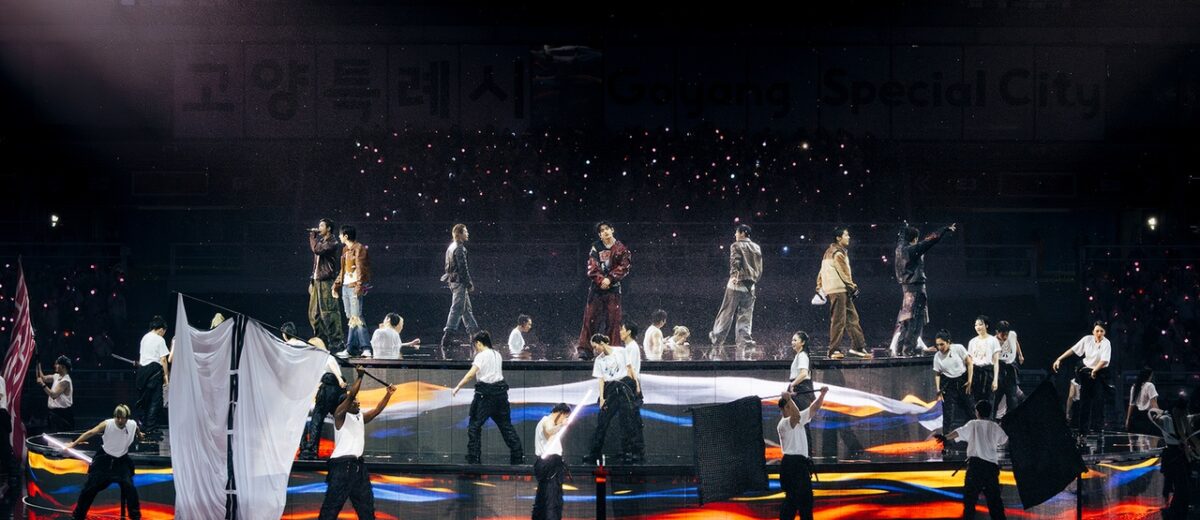
The strongest change came from the production design. According to Yonhap, the concert’s 360-degree setup gave fans a clear view from every angle, while the members repeatedly turned and regrouped around a raised circular platform. Korea JoongAng Daily added that the venue layout used four pillars and giant screens around the open stage, creating a fully immersive stadium format instead of a front-facing spectacle. That choice shifted the relationship between artist and audience. The show no longer looked like something delivered outward from a single heroic point. It moved like a space shared in the round.
Just as important was the cultural vocabulary layered into that design. Yonhap highlighted traditional Korean masks during “they don’t know ’bout us,” fabric work inspired by seungmu in “Merry Go Round,” and LED flags and ribbons evoking sangmo during “Body to Body.” NME took the same observation further, describing a high-tech production shaped like a pavilion and tied to visual references from Gyeongbokgung’s Gyeonghoeru. These details did not read like decorative add-ons. They gave the concert a coherent visual argument: if Arirang is BTS’s album-length statement about Korean identity, the tour is where that statement becomes physical.
Old songs returned with a different weight
The setlist helped sell that argument. New tracks such as “Hooligan,” “Aliens,” “Swim,” “2.0,” and “Body to Body” did much of the conceptual work, but older songs were not included as nostalgia triggers alone. Korea JoongAng Daily singled out the transition from “Body to Body” into “Idol” as one of the most revealing moments of the night, linking the folk-source textures of the new album to a track that once helped define BTS’s global ascent. In that sequence, past and present stopped competing with each other. They locked together.
Other choices supported the same effect. Yonhap pointed to the crowd reaction around “Mic Drop,” “Fire,” and the singalong section built on the “Arirang” melody sampled in “Body to Body.” NME, meanwhile, emphasized a looser section late in the show, including a nightly audience-request segment it dubbed “BTS karaoke.” On April 11, that portion reportedly delivered live versions of “Take Two” and “DNA,” with the members leaning into spontaneity rather than polish. For a group operating at this scale, that small allowance for disorder may be one of the smartest moves in the set.
Why the Goyang opening matters
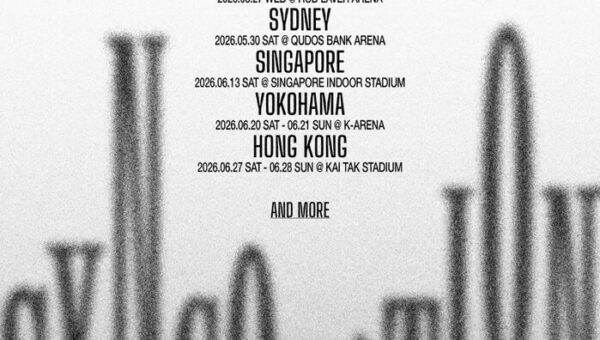
In practical terms, these shows launch a massive global run, with Tokyo next on the itinerary. In symbolic terms, they do more. They place BTS back in a stadium context without asking the audience to pretend the world is still 2019. The energy remains overwhelming. Yonhap described tens of thousands of fans turning the venue purple, while Jungkook told the crowd, “It may still be a little chilly, but we’ll warm you up.” The scale, the fan response, and the catalogue are all intact. What changed is the frame.
That is why Goyang feels larger than an opening stop. BTS used it to introduce a version of itself that is less concerned with replaying its old pop mythology and more interested in shaping a durable performance identity for the decade ahead. If the Arirang era succeeds globally, the real beginning may be remembered not as a chart milestone, but as the weekend when BTS turned a comeback into a live blueprint.