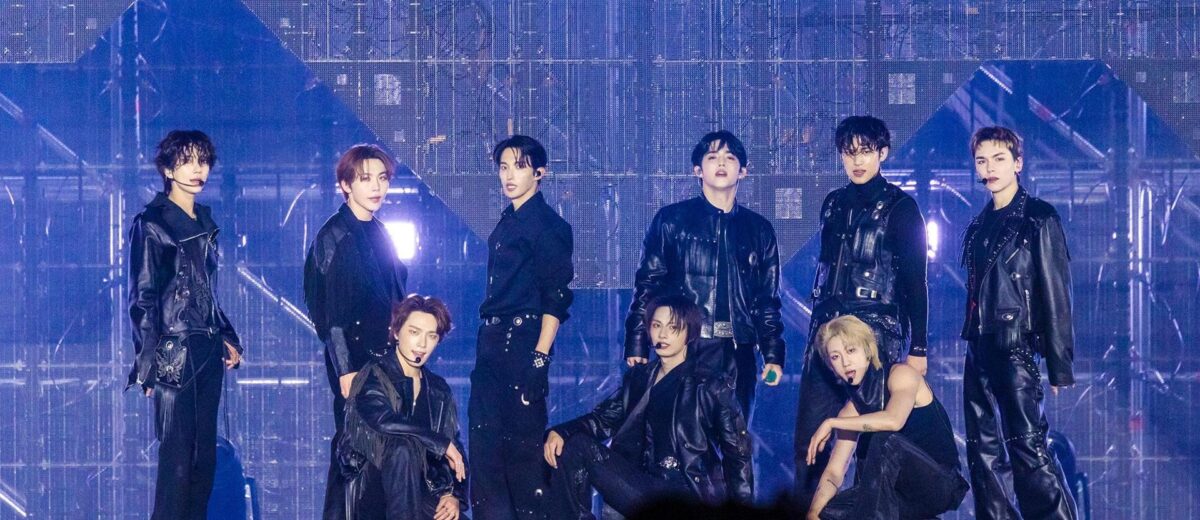
SEVENTEEN contract renewal news is dominating K-pop headlines after all 13 members confirmed they will stay with PLEDIS Entertainment for a second full-group renewal. The announcement came at the emotional finale of the group’s SEVENTEEN WORLD TOUR ‘NEW_’ ENCORE in Incheon, giving CARAT one of the clearest signs yet that the group’s long-term future remains intact even as military service temporarily changes the shape of full-group activities.
For fans, industry watchers, and anyone tracking the future of top K-pop acts, this is bigger than a routine contract story. In an industry where lineup changes, agency exits, and enlistment-era uncertainty often raise difficult questions, SEVENTEEN’s decision sends a rare message of stability. The group is not only extending its relationship with PLEDIS, but also reaffirming its identity as a 13-member act at a time when maintaining unity has become one of the hardest challenges for veteran idol groups.
Why SEVENTEEN’s contract renewal matters so much right now
The biggest reason this story has exploded across K-pop media is timing. SEVENTEEN revealed the renewal at the closing show of its Incheon encore concerts on April 5, turning the final night of a major world tour into a moment of reassurance and celebration. According to Soompi, leader S.Coups personally shared that all 13 members had completed their renewals with PLEDIS Entertainment, making this the group’s second full-group renewal after its early extension in 2021.
That detail matters. Many idol groups survive one renewal cycle but struggle to preserve complete membership into a second major extension, especially after a decade in the business. SEVENTEEN debuted in 2015, and by now the group has already moved beyond the point where fans typically begin to worry about agency changes, sublabel restructuring, or partial departures. Instead, the group has chosen to present a united front once again.
Korea JoongAng Daily reported that the members’ contracts were set to expire in April, meaning this was not symbolic language or vague future talk. It was a concrete decision made at a critical moment. The agency also confirmed that SEVENTEEN would continue releasing music not only as a complete group, but also through subunits and solo projects. That combination is especially important for a senior act navigating enlistment, because it shows that group continuity and individual career growth are being treated as complementary rather than conflicting goals.
The Incheon encore concert turned a business update into an emotional milestone
Part of what makes this SEVENTEEN PLEDIS renewal story so compelling is that it was delivered in front of fans rather than through a dry corporate notice. Soompi reported that S.Coups addressed the crowd during the second and final show, explaining that the members felt it was right to share the news directly before the next major fan event. That decision gave the announcement a deeply personal tone and made it feel like a promise, not just a press release.
“After having deep conversations among ourselves, all 13 of us decided to renew our contracts. We’ll stay on the same ship and keep rowing forward together with all our strength.”
S.Coups, as reported by Soompi
The Korea Herald reinforced that message, noting that S.Coups described the decision as the result of long and serious discussions. He also referenced the emotional reality of this period for the team, acknowledging that not all members could be onstage together because of military service. Rather than weakening the announcement, that context made it more meaningful. SEVENTEEN was effectively telling fans that temporary absences would not change the group’s long-term commitment to one another.
The Korea Times added another important layer by placing the announcement inside the wider scale of the group’s recent tour. The outlet reported that the seven-month run drew more than 900,000 fans across 31 shows in 14 cities, both in person and online. In other words, this was not simply a sentimental encore speech. It arrived at the peak of a massive global live cycle, when SEVENTEEN had every reason to reflect on what they had built and what they still wanted to protect.
That is why the moment resonated so strongly across fandom spaces. A contract renewal can feel abstract on paper, but at a rain-soaked or emotionally charged tour finale, it becomes part of the group’s narrative. It says that the history fans have invested in is still moving forward.
What this means for SEVENTEEN’s future as a 13-member K-pop group
The central takeaway from this SEVENTEEN contract renewal is not merely that the members stayed with the same agency. It is that they reaffirmed the 13-member framework that has defined the group’s creative identity from the start. For a team known for synchronized performance, self-production, unit structure, and strong internal chemistry, membership continuity is not cosmetic. It is part of the product, the storytelling, and the emotional contract with fans.
Rolling Stone Philippines framed the decision as a show of commitment during a period when full-group activity will naturally become more complicated. Some members are already serving, more enlistments are expected, and schedules will continue to evolve. Even so, the group made it clear that SEVENTEEN will keep moving through different configurations without abandoning the complete team identity that fans recognize. That distinction matters because it allows the group to remain flexible without encouraging speculation that the brand is slowly dissolving.
There is also a larger industry implication. K-pop’s first generation and second generation offered many examples of groups that continued in name while becoming fragmented through separate agencies, inactive members, or unclear contract arrangements. Third-generation groups face similar pressures, but with even higher global expectations and more complex touring, branding, and content ecosystems. SEVENTEEN’s choice suggests that a mature K-pop act can remain commercially ambitious while preserving a clear collective identity.
That is why the phrase “all 13 members renew contracts” has become such a powerful search phrase today. It signals certainty in a sector where certainty is rare. It also gives fans a practical answer to a question that has hovered over the group throughout its enlistment era: what does SEVENTEEN look like after the first big disruption to its complete lineup? The answer, at least for now, is that the group still sees itself as one team moving toward the same destination.
How PLEDIS and HYBE benefit from this renewal
From a business perspective, the renewal is also major news for PLEDIS Entertainment and parent company HYBE. Korea JoongAng Daily reminded readers that PLEDIS was acquired by HYBE in 2020, meaning SEVENTEEN has continued to grow under a structure that combines its original label identity with the wider reach of a major entertainment conglomerate. Keeping all 13 members under that umbrella protects one of the most important long-term assets in contemporary K-pop.
SEVENTEEN occupies a valuable space in the market. The group is old enough to command veteran loyalty, young enough to remain deeply relevant, and flexible enough to generate revenue through albums, touring, units, solo ventures, merchandise, and major fan events. A second full-group renewal reduces uncertainty for everyone involved, from investors and brand partners to promoters and streaming platforms. It also gives the label a stronger foundation for planning the enlistment-era schedule rather than reacting to it one announcement at a time.
Just as importantly, the group’s public messaging has emphasized trust instead of mere obligation. The Korea Times quoted the members as saying they would return as 13 members soon and asked fans to wait a little longer. That wording matters because it keeps the emotional focus on reunion, not interruption. For an entertainment company, that kind of narrative continuity is invaluable. It helps maintain fan confidence during periods when the calendar may look less straightforward than it did in SEVENTEEN’s peak full-group touring years.
Why fans are reading this as a promise, not just a contract
CARATs are responding so strongly because this announcement touches on more than paperwork. It confirms that SEVENTEEN’s relationship with its fans remains central to the group’s decisions. The Korea Times explicitly reported that the group said its choice was driven by CARAT, while multiple outlets emphasized that the members chose to share the news at a live event rather than letting the agency speak first. That is why the reaction has felt emotional instead of procedural.
There is also an anniversary-era feeling to the story. SEVENTEEN is no longer a rising rookie act proving it belongs. It is a veteran group protecting the bond that helped it outlast industry cycles, platform changes, and global expansion. Every new era now raises a larger question: can a major K-pop group grow older without losing its internal center? This renewal suggests that SEVENTEEN believes it can.
The timing of the next fan-centered events only deepens that optimism. Rolling Stone Philippines and Korea Herald both pointed to the group’s upcoming June fan meeting in Incheon, which is expected to become another major checkpoint in the group’s evolving post-tour era. Even if the road ahead includes staggered activities, unit promotions, and enlistment-related pauses, the core message of this week’s headline is simple. SEVENTEEN is still planning its future together.
Final thoughts on the latest SEVENTEEN renewal news
In the crowded flow of daily K-pop headlines, very few stories feel both immediately newsworthy and historically meaningful. SEVENTEEN’s second full-group renewal is one of those rare cases. It arrived within the past 24 hours, it was delivered at a powerful live moment, and it directly answered one of the biggest long-term questions surrounding one of K-pop’s most successful groups.
For that reason, the SEVENTEEN contract renewal story stands out as more than entertainment news. It is a case study in group longevity, fan trust, and strategic stability in modern K-pop. By confirming that all 13 members will remain with PLEDIS Entertainment, SEVENTEEN has not only secured its next chapter. It has also offered fans and the wider industry a rare image of continuity at a time when continuity is often the hardest thing to hold onto.
As the group moves toward its next fan meeting, more unit promotions, and eventually another full-group reunion, this announcement will likely be remembered as one of the defining K-pop moments of the spring. Not because it was dramatic in the usual sense, but because it was steady, deliberate, and full of confidence. In K-pop, that kind of certainty can be just as headline-worthy as any surprise comeback or chart milestone.